

 2023 could be a great time to launch a t-shirt business start-up. There are several reasons behind this. In general, 2023 looks like it could be a good year for small business. However, there are also some good signs that apply specifically to t-shirt printing.
As the owner of a business that makes and sells custom t-shirts, many of your customers are likely to be young people. The younger generation is socially conscious and they are often willing to pay a little more to invest in small businesses as opposed to a major company.
0 Comments
 Screen printing involves pushing different color inks through ink-blocking mesh and stencils to create messages, logos, and designs on caps, t-shirts, hats, signs, water bottles, posters, gym bags, and more. T-shirt printing is by far the most popular and common activity in the screen printing shop, and for very good reason.
A good screen printing company can be very profitable right out of the gate, with worker salaries and employer annual sales at very impressive numbers. Today we tackle the question about how much money can you expect to make working at or owning a screen printing shop.  Many T-Shirt printers, sign makers and screen printers will at one point or another, find themselves in an unpleasant situation: do they print something they find offensive, or do they turn away a customer? It’s an unfortunate reality of the business, where personal morals and ethics will inevitably clash with those of the public.
In today’s world of instant feedback and social media, denying service to a customer can be very problematic for a business owner. This, obviously, makes it hard for many business owners to know what to do.  T-shirts are to casual wear what suits are to formal. Universally accepted and never out of fashion, it’s no surprise how many T-shirt printing businesses have succeeded online. The T-shirt is a canvas waiting to be filled with imagination. But, as often is the case, sales are hard to come by for some printers.
Why is it that people prefer one T-shirt printing company over another? Don’t be shocked to find out that some print shops are actually doing well despite offering sub par service and print quality. If you’re looking to boost your T-shirt printing business, here are five tips that can you help you rake in more customers!  Setting prices is one of the most sought after pieces of information by t-shirt screen printers. Setting accurate, fair pricing can make or break a business.
You do not want to price your goods too high and not get business, but on the other hand you want to make a profit to stay in business and grow. If you think that just setting your prices lower than your competition will get you work, you may be right. But will you make a profit on the job AND make enough to keep your business running? Think again...  If you’re thinking of raising the prices in your T-shirt printing business, there’s a very simple answer to whether you should go through with it or not. The answer is yes.
Why? Because if you’re asking the question, there’s probably a good reason. Maybe the cost of operations is increasing. Maybe you want to improve the quality of your goods and services. Maybe you just want to increase the profitability of the business. These are all perfectly good reasons for your business — or any business — to raise their prices. So what’s the hard part? Well, working out how much to raise prices by. This is where it gets tricky and you need to consider a few things first.  Landing your first few customers is a monumental step; it's a sign that your business is starting to bloom.
Unfortunately, this is also a time when you're most vulnerable. In your excitement to get to work, it's easy to completely overlook the fact that a potential business partnership might be a complete train wreck. Imagine putting hours or even weeks of time into helping someone, only to have one or both of you terminate the relationship. The concept seems painful when you're new to the game, but it's a reality that every business person will eventually face.  If a customer who pays by credit card places the transaction in "dispute" with their credit card company, you will need to work out the problem that caused them to stop payment. This may be as simple as they do not recognize your business name on their credit card statement. If there is another problem, address that problem with the customer. The credit card merchant will mail you a form to complete to address and settle the dispute.
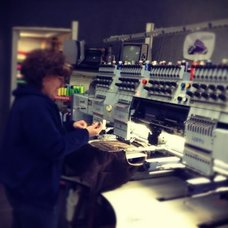 If you add this service the smart way, offering embroidery services will definitely help your screen printing business to grow.
Before you make a firm decision about whether or not to provide this service at your printing company, you should consider a range of factors, such as demand, the cost of an embroidery machine and your marketing strategy. When you do think about all of the variables, you'll be able to decide whether or not embroidery services are right for your business.  Four Things Your Business Should Never Pay For
As a business seeking to thrive in today's often brutally competitive marketplace, there's certainly no shortage of things to spend money on to boost your efforts. While there are plenty of legitimate paid marketing tools and methods out there, there are a few other things that will likely do more harm than good. In fact, chances are that you've already had some offers from so-called marketing "experts" claiming to deliver amazing results overnight for very little money. After all, there's no shortage of outright scammers out there. There are some things that no business should ever pay for if it intends to protect its online reputation, such as the following... |
AuthorASPA Staff and others Archives
April 2023
Categories
All
|
 RSS Feed